
Hall of Fame History
The KAB Hall of Fame Award is the highest honor bestowed upon an individual by the Kansas Association of Broadcasters. Recipients of the KAB Hall of Fame Award are individuals who have attained positions of national prominence in the industry or its allied fields, have been majors contributor to the growth and welfare of radio and television in Kansas or nationally, and have been exemplary stewards of broadcasting.
In 1969 the organization established the Distinguished Service Award (DSA) to honor an individual for exemplary service to the community, state, and broadcast industry. All DSAs prior to 2000 were automatically inducted into the KAB Hall of Fame when it was started that year. DSA honorees are included in our Hall of Fame library with an asterisk next to their names. The DSA was retired in December of 2023.
Congratulations to this incredible group of Kansas broadcasters!
2025: Rich Epp, Roger Brokke, Ron Thomas
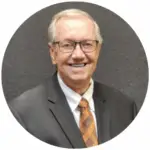
Rich Epp
Broadcasting began in Rich Epp’s early years, after studying journalism at Colby Community College, starting as sports director at KLOE Radio and TV in Goodland. He later became the voice of University of Illinois football and basketball at WITY before returning to Kansas, where he built a long and successful career in sports broadcasting and sales. Over the years, he worked at KLOE, managed KCOW in Nebraska, and served as sales manager at KTPK in Topeka. In 1993, he returned to Colby to manage sales at KLBY-TV while continuing play-by-play for KLOE and KQLS.
Although health challenges led him to step back from sales in 2002, Rich remained dedicated to broadcasting. He continued calling high school and college sports in northwest Kansas and, in 2009, he and his wife Judy founded Open Spaces Sports—one of Kansas’s first live-streaming companies.
Throughout his 54-year career, Rich earned numerous honors, including the Oscar Stauffer Sports Broadcaster Award, the Hod Humiston Award, KIAAA Sportscaster of the Year, and the Kansas Wrestling Coaches Media Award. Today, Rich and Judy’s legacy lives on through Open Spaces Sports, which employs 17 people and covers 30 schools across the region.
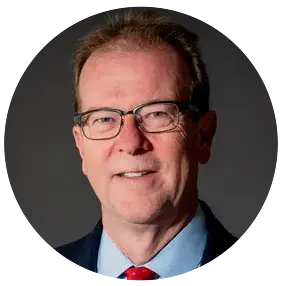
Roger Brokke
Roger Brokke enjoyed a distinguished career in media, beginning with broadcast sales at radio stations in South Dakota and North Dakota. He later held sales and management positions with Knight Ridder newspapers in several states before becoming Advertising Director at the Topeka Capital-Journal.
Roger joined WIBW-TV in sales and quickly rose to General Sales Manager, beginning a decades-long career with WIBW. He ultimately retired in late 2024 as Vice President, General Manager, and Director of Sales.
Throughout his career, Roger was recognized for his strong leadership and commitment to advancing the broadcasting industry. He served on the Kansas Broadcasters Board of Directors and as Chair in 2024. Under his leadership, WIBW earned 11 consecutive KAB Station of the Year awards, two Tony Jewel Community Service Awards, the NAB Service to America Award, and numerous other honors.
Roger’s leadership not only shaped WIBW’s success but also left a lasting impact on broadcasters across Kansas.
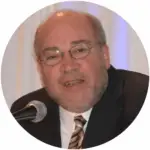
Ron Thomas
Ron Thomas has dedicated more than three decades to broadcasting in Emporia, Kansas, serving as both General Manager and longtime morning show host at KVOE-AM. After studying at Montana State University and the May School of Broadcasting, he began his career in sports broadcasting, calling play-by-play across Montana, Wyoming, South Dakota, and Iowa.
In 1986, Ron joined KVOE as Program Director and news reporter, later becoming Morning Show Host, and in 2011 advancing to General Manager. Even while overseeing station operations, he has continued to host the Live and Local Morning Show, where he interviews community leaders and highlights local events.
Under his leadership, KVOE has thrived in both service and recognition. The station earned the NAB Crystal Radio Award for excellence in community service, and Ron was named a finalist for the NAB Marconi Radio Personality of the Year. He has also been a dedicated leader in the Kansas Association of Broadcasters, serving on its Board of Directors and as Chair in 2017.
2024: Kyle Bauer, Ben Bauman, Paul Heskett, Greg Sharpe
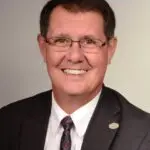
Kyle Bauer has been one of the owners of Taylor Communications (KCLY and KFRM) since 1994. In 2024, he purchased 10 stations from Rocking M in Colby, Goodland, Liberal, and Dodge City. He serves as the General Manager of KFRM, its National Sales Representative, and is also the co-host of the popular show “Plain Talk.”
Kyle is a native of Clay Center, where he grew up in a farm family. He graduated from Kansas State University and has worked as a farmer, business operator, and commercial real estate owner.
Kyle has served on the KAB Board of Directors and the National Association of Farm Broadcasters Board of Directors. He has twice been awarded the National Agri-Marketing Association’s R.C. Ferguson Award and the President’s Award. Additionally, Kyle has been a valuable associate and advisor to the KAB, including participating in trips to Washington, D.C., on behalf of the organization. Under Kyle’s leadership, KCLY and KFRM have earned numerous accolades, including seven consecutive KAB Small Market Station of the Year awards for KCLY and a total of 11 Station of the Year titles.
Kyle is also well-known for his community involvement. He is a Rotary Club member and Past President, Past President of the Pawnee Mental Health Foundation Board, and has served on the Clay Center Board of Zoning Appeals and the Planning Commission. He has contributed to numerous community projects, including advocacy and improvements.
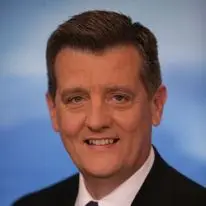
A lifelong Kansan, Ben Bauman grew up on a farm near Bern in northeast Kansas. Throughout his broadcasting career, he remained true to his rural roots, living near Holton.
Ben began his career in 1982 as a student part-timer at KTWU, the PBS station licensed to Washburn University. In 1983, he added a weekend radio news job at 580 WIBW. After completing his communications degree in 1985, he joined WIBW AM-FM and their newly added Kansas Information Network.
For much of the next two decades, Ben served as the primary morning anchor for the local flagship and statewide network, including 10 years as News Director. In 2006, Ben transitioned to television, serving as evening anchor for KTKA (KAB Medium Market Station of the Year in 2008), KTMJ-Fox 43, and later KSNT after the stations merged.
In addition to broadcasting, Ben served as Communications Director for Governor Bill Graves’ administration, Public Relations Manager for St. Francis Hospital, Public Affairs Director for the Kansas Adjutant General, and Talent Development Coordinator at Advisors Excel.
Ben has received numerous KAB and AP Broadcast awards. He was selected as a fellow with the RIAS Berlin Commission German-American Journalist Exchange in 1999. He covered the Kansas National Guard delegation visit to Armenia in 2005 and was embedded with a unit from Fort Riley during combat training at Fort Irwin, CA. He is a 2001 graduate of Leadership Kansas. Ben still satisfies his passion for broadcasting through his voiceover and audio production business, BBSideMedia, and is the “voice” of The Voice of Agriculture-Kansas Farm Bureau and other clients. Ben and his wife, Marj, have three children, seven grandchildren, and two great-grandsons.
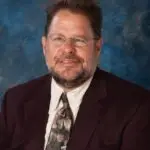
Paul Heskett has spent his 40-year career in Kansas, beginning at KAYS, KFNF, and KIOL before finding his home at KXXX in northwest Kansas nearly four decades ago. His iconic “Bop Shop Saturday” show has become a staple, known for his unique style, high energy, crazy humor, and unparalleled connection with listeners.
In 2011, Paul received the KAB Sonny Slater Award for Service to Community and Station. He has also won numerous KAB awards for “Bop Shop Saturday.”
Paul is deeply involved in his community as a member of the Jaycees, a board member of the Wild West Historical Foundation, and a participant on multiple local boards promoting civic engagement and historical preservation. His dedication extends to supporting veterans through the VFW Auxiliary, Run for the Wall, and his work with Kansas Honor Flight. Paul has also emceed many events, including the Kansas Governor’s Hunt.
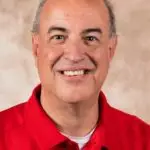
Greg Sharpe has been the Voice of the Huskers since 2008. A two-time Kansas Sportscaster of the Year winner, Greg served as the Voice of the Wildcats for his alma mater, Kansas State, from 1996-2002 and is forever linked to one of the greatest periods in college football history, with the Wildcats posting 59 wins during his six seasons.
Long before he took over as Voice of the Wildcats, Greg was well known as a talented sports anchor for WIBW TV in Topeka for 22 years and hosted 580 Sports Talk for many years.
2023: Mike Manns, Dale Morrell, Randy Picking, Ian Punnett*
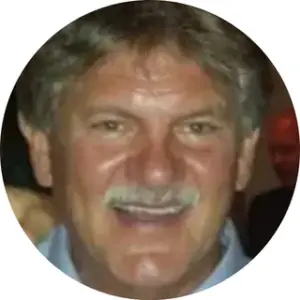 Mike Manns took his first radio job in 1969 at KNBI in Norton, KS, where he covered the morning drive, teen time, and high school sports. In 1970 he entered the US Navy, attending Sonar School, and in 1972 (after honorable discharge) joined Midland Broadcasting in Topeka as their afternoon newsman. Four years later he became their news and sports director and continued in that capacity through the sale of Midland Broadcasting to Cumulus. During that 45‐year span, he served in numerous additional roles. He was a sports anchor at KSNT TV from 1979‐1981, a WIBW TV sports reporter from 1982‐1984, and hosted KTKA Television’s Post Game Scoreboard show from 1985‐1987. Mike retired from reporting the news in 2018.
Awards and recognition include receiving KAB’s Hod Humiston Award for Outstanding Contributions to Sports Broadcasting in 2010. He received the Kansas State High School Activities Association’s Oscar Stauffer play‐by‐play award in 2010 and 2012 and the Kansas Basketball Coaches Association best play-by‐play in 2009. He received awards from the University of Kansas for Women’s Basketball play‐by‐play in 1994, 1995, and 1996. Mike received the Recognition Award from Robinson Middle School in Topeka where he also coached football for 22 seasons. He holds the Guinness Book of World Records for Longest Running Morning Show in Radio: Hooker & Manns. They have been on air (107.7 KMAJ) for an incredible 33 years.
Mike and his wife, Vickie, have been married for 43 years and have two daughters, Lacie and Kaylee. His hobbies include riding his Harley and attending his granddaughter’s sporting events.
The building and grounds upon which KAKE rests is dedicated to Dale Morrell, KAKE’s second Chief Engineer. A native of Winfield, Kansas, Dale began his career at KAKE as a master control operator on October 19, 1967, KAKE’s 13th anniversary. After serving his country in Vietnam, Dale returned to KAKE’s Engineering department. He served as Chief Engineer for 42 years from 1980-2022, skillfully leading the tradition of quality and reliability for which KAKE is known. For 55 years he cared for every inch of the KAKE campus and his fellow employees.
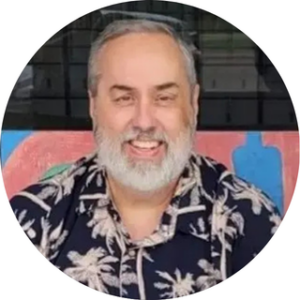 Randy Picking began his radio career in January of 1976 when he kept stats and provided color commentary for KSAL sports. Randy spent so much time watching and learning from announcers at KSAL/KYEZ, that he was offered a paying part-time job as a tape changer and recorded weather updates for KYEZ to limit his hours at the station in 1977. Randy’s first full time job was the 6pm‐midnight announcer at KSAL in 1980 and became the operations manager at KYEZ in 1981. Randy has been an announcer, news reporter, news director, public service director, sales representative, storm chaser, and talk show co‐host. His career has taken him to the following stations, KSAL, KYEZ, KABI, KSAJ, KFRM, KSKG, and KINA. After retiring at the end of 2019, Randy returned to radio to co‐host KINA’s “Coffee Talk” with Jerry Hinrikus in November of 2022.
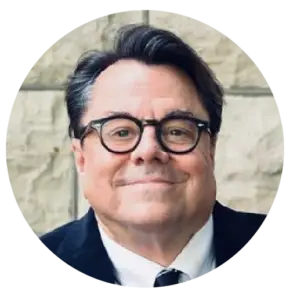 Ian Punnett, MDiv, Ph.D.*, is professor of practice at Kansas State University where he specializes in researching and teaching media business and entrepreneurship, media history, podcasting, and serves as the chief operator/faculty advisor for Wildcat 91.9, recently voted the Best College Radio Station in the nation. While at K‐State, Ian has been honored more than three dozen times for his multi‐platform creative work in audio, video, digital, and print.
During his 35‐yearlong professional career, Ian was most successful in hard rock morning radio through the ‘90s before switching to talk radio first at WGN/Chicago and later legendary talker WGST in Atlanta. At the same time, he was picked up by 600‐affiliate overnight radio show Coast to Coast AM where he worked with the legendary Art Bell and later George Noory. Ian continues to perform two to five times a month on Coast to Coast from his home studio in Manhattan. Before coming to K‐State in 2018, Ian published his fifth book, Toward a Theory of True Crime for Routledge Press, which was based on his groundbreaking dissertation that sought the line between traditional crime journalism and the multi‐platform True Crime products. Ian is considered an expert in True Crime narratives, with his dissertation cited 60 times in other scholarly works and he speaks internationally at various symposia on the media phenomenon.
Ian has a wife of 38 years, Margery, and two sons.
2022: Don Free, Jack Oliver, Wyatt Thompson
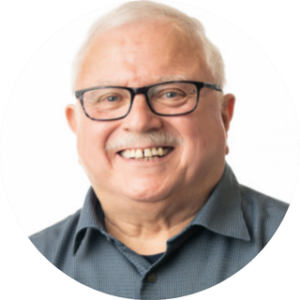 Don Free is a Topeka resident and has spent over 50 years in broadcasting. He joined the Air Force in 1964 and in 1967 while stationed at Forbes Air Base in Topeka, started working part time at WIBW-TV. Following his discharge from the Air Force, he went full-time as their cameraman and directing news. Four years later, Don moved into engineering, which was his ambition leaving high school. He began helping on TV remotes to broadcast an array of sporting events, including the Kansas City Royals.
In 1985, Don had the opportunity to engineer 15 radio games for the Royals Radio Network, the year they won the World Series. The next season, he was hired full time with the Royals and started his 32-year-long dream job. Don retired from the Royals following the 2017 season. Without Don’s expertise, patience, and engineering ingenuity, those memorable play-by-play calls from Denny, Fred, Ryan, Bob and Steve would never have been heard. During his remarkable career, Don and his family lived in Topeka, meaning he drove to the Royals’ stadium 81 times a year and to his other “office” at a ballpark somewhere around the country 81 more times.
Despite being retired, Don continues to engineer some radio games for visiting teams at Kauffman Stadium and works with the Kansas State Football Radio Network as an engineer. Don was inducted into the Shawnee County Baseball Hall of Fame in 2018 and received the Bob Fidler Award designated for a media member who helped promote the sport.
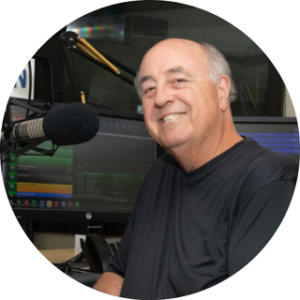 Jack Oliver has been married to Jana 48 years, and they have two sons and six grandchildren. Since 1969, Jack has worked at numerous Wichita radio stations including KLEO (1969) (only a few overnights, then on to KGNO in Dodge City and then Back to Wichita at KAKE (1973-1979), and KKRD (1980-2004). Since 2004, Jack has been program director at KEYN (Audacy, Inc.). Previously, he was heard daily from 12-7 p.m. However, following the death of Don Hall in April of 2020, Jack moved from afternoons to host the KEYN morning show. Jack advises young radio broadcasters to “find a city that likes you and stay for a while.”
Early in his broadcast career, Jack received a first-class radiotelephone operator’s license through the FCC. In addition to this, he developed extraordinary skills as a top radio programmer, on-air talent, and production voice. Jack never worked with wax cylinders, but he has certainly watched the broadcasting industry grow from its days of analog mono, tape and vinyl to its evolution into stereo and digital, and at age 72, he has adapted well and today still enjoys practicing his craft.
Jack is from Wynnewood, Oklahoma. He’s a 1968 graduate of South High School in Wichita and earned a master’s degree in Business Communications from Wichita State University. Jack is very active in Wichita’s Native American Community and served on the board of directors of the All-American Indian Center for ten years. From 1994- 1996, he was a board member of the Wichita Zoning Commission and from 1996-1998 was a board member of the Wichita Traffic Commission. Jack has also helped to raise millions of dollars for local charities.
In addition, Jack has been a sought-after speaker on numerous panels at radio-TV conventions such as the NAB, Radio &; Records, The Gavin Report, and The Conclave. He also received a prestigious nomination for air talent and program director of the year from Billboard Magazine, Radio & Records and Hitmakers Magazine.
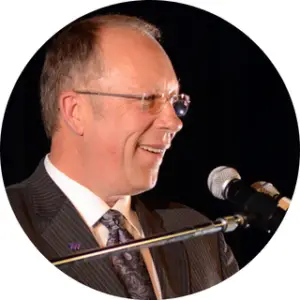 Wyatt Thompson has served as the voice for K-State Athletics since 2002. In addition to play-by-play responsibilities for football, basketball, and select K-State Baseball games, he also serves as host for football and basketball coaches show on the K-State Radio Network. Additionally, Wyatt hosts weekly television shows for football and basketball throughout the state.
This year Wyatt enters his 21st year with his on-air partner Stan Weber for the 2022-23 sports season. He is the recipient of numerous broadcast awards, including the KAB’s best play-by-play (1982), the Oscar Stauffer Sportscaster of the Year (1989), and the Hod Humiston Award for Sports Broadcasting (2011). Since arriving at K-State, he has been recognized as the Kansas Sportscaster of the Year award six times and won numerous other awards.
In his role as the liaison between the K-State Athletic Department and the public, Wyatt is well known throughout the state, often traveling for appearance requests. He has emceed almost every Catbacker event over the last 20 years.
Wyatt is a role model for aspiring young broadcasters and has participated in numerous KAB events from the annual KAB convention as a panelist to KAB sponsored seminars. He has always been generous with his time making himself available to help young people wanting to get into the business. Wyatt Thompson’s career truly exemplifies where hard work can take you in your career while also being respected by those he works with and admired and loved by the tens of thousands of K-State fans who look forward to his broadcast of K-State sports each week.
2021: Dan Israel, Danny Thomas, Steve Smethers*
Dan Israel is the Executive Producer of the Kansas City Chiefs Radio Network and has served Kansas and regional broadcasters for nearly four decades. In his role, he has built the largest network in the National Football League, which includes 45 markets and stations in Kansas. Moreover, Dan has been a great service to Kansas broadcasters as one of the nation’s top engineering and programming consultants.
Dan is not only the Executive Producer of the Kansas City Chiefs Radio Network, but he also serves as co-host of the official Chiefs Pre-Game show heard each week during the NFL season on more than one hundred stations in fifteen states.
Dan began his career of service to the public and to the industry with Kansas City’s KCMO-AM in 1982. In 1990, he began his long tenure with the Chiefs Radio Network. Dan Israel’s influence, creativity and leadership over the past four decades has helped Kansas broadcasters at both the local and network level. He has truly been a pioneer in production, engineering and progressive on-air sound. Dan’s impact has led to the Chiefs Radio Network being one of the most innovative and highest rated game-day broadcasts in the National Football League. However, Dan’s sphere of influence has also had a national and international impact. In addition to Chiefs Radio, Israel’s work has been featured during the Olympic games plus HBO, Showtime, ESPN, NBC, CBS and Fox Sports.
Danny Thomas started his Career in Furniture Retail Sales, Management and Marketing Director. He went from Marketing planner and buyer to seller in the early 80’s working in Radio, Television, Television Sales Management and General Management. He’s a Lifetime Achievement Award Winner of The Kansas Association of Broadcasters Mike Oatman Award for Sales, Training and Mentoring. He is also a member of the Midwest Media Hall of Fame. While operating KOAM as its President/General Manager from 1995 to present he also developed and launched KFJX-TV, a full power FOX Affiliate in the Joplin/Pittsburg Market on behalf of Surtsey Media under a shared service agreement. He has spent decades providing Sales Training, Sales Presentations, Motivational Speeches and Marketing Seminars to Businesses and Organizations across the United States. See his web site at www.dannythomasseminars.com.
Steve Smethers is a past member of the KAB board of Directors and KAB Foundation. Smethers’ radio career began in 1968 as a reporter and part-time disc jockey on KALN in Iola, and over the next two decades, he worked in programming, management and ownership roles in radio markets across Kansas and adjoining states. From 2006-2014, Smethers coordinated the Great Plains Radio History Symposium, which highlighted the legacy of broadcasting in Kansas and adjoining rural Midwestern states. As a member of K-State’s A.Q. Miller School of Journalism and Mass Communications faculty, Smethers is helping to inspire future generations of community journalists, including broadcasters. Currently the Director of the school, Smethers also has held positions as KSDB-FM adviser, head of the radio-TV sequence, Associate Director of Undergraduate Studies and Associate Director of Graduate Studies.
2020: Don Hall, Kent Cornish*, Ralph Titus
Kent Cornish* has been a Kansas broadcaster for over 40 years, starting as an intern at WIBW in Topeka in 1975 and concluding his career as President of the KAB last year. Kent graduated from University of Kansas with a degree in journalism. In between, Kent was a news anchor and assistant news director and operations manager at WIBW for 12 years, and general manager for 10 years at KTKA TV in Topeka and 7 years at KSAS/KMTW TV in Wichita. After decades managing broadcast stations, he become president of KAB in 2008. Kent has had a long and successful career earning esteemed awards including the Grover Cobb Award from the University of Kansas.
He has also served in numerous leadership capacities including former president of the National Alliance of State Broadcast Associations, the former Chairman of Greater Topeka Chamber of Commerce and the Topeka Community Foundation. Kent served as the Kansas Sunshine Coalition for Open Government treasurer for the past 12 years, has spent countless days working hand-in-hand with the Coalition to promote open government through legislation, education, and assisting litigation on behalf the KAB and the Sunshine Coalition.
Don Hall grew up in Overland Park. He graduated from Shawnee Mission West High School in 1967 and earned a degree in business administration from Pittsburg State University in 1971. While in college, he lettered in golf, was president of the Tau Kappa Epsilon Fraternity and worked at KSEK Radio. He spent two years at KWBW in Hutchinson, before coming to KEYN in 1974. Don was a radio personality for KEYN, KAKZ, KKRD and KZSN in Wichita before returning to KEYN in 2009. In 1984, Don became the public address announcer for Wichita State University Shocker Basketball. During 36 years as an announcer at WSU, Don only missed two games. His dedication to the school was evident and appreciated.
During his extensive community service and volunteer work, Don received hundreds of awards, plaques and letters of appreciation from organizations throughout Sedgwick County. One of the top awards, however, was induction into the Wichita Sports Hall Of Fame, Class of 2019. In addition to public address work for WSU, Don also did P.A. work for Wichita’s indoor football teams as well as the NBC Tournament.
Don Hall was involved in numerous Wichita and Sedgwick County charities and community organizations. Some of them include: The Wichita American Legion Honor Flights, the DUI Victim’s Center of Wichita, Wichita Open’s Youth Golf Charities, United Way Of The Plains, Rainbows United and The Make-A-Wish Foundation. Don attended Grace Point Church with his wife Linda. As a proud U.S. veteran, Don also enjoyed being a member of the American Legion and rode with the Kansas Patriot Guard.
Don’s many contributions to the industry and to the community he loved deserve consideration and warrant a spot in this prestigious group of Kansas broadcasters. In his April 2020 blog, Mike Matson wrote: “In the late 1970s, KEYN was the Rock of Wichita, but in the years since, Don Hall ‘BECAME’ the Rock of Wichita.”
In June of 1951, Ralph Titus was hired to work at station KSAC in Manhattan when he entered K-State as a freshman. This extraordinary public service was Ralph’s introduction to KSAC and gave him a real understanding of radio’s ability to serve communities in times of need. It was a meaningful illustration of serving the public interest, convenience and necessity that he would never forget.
During his college years at K-State (1951-1955), Titus wrote and produced many programs, conducted weekly interviews with K-State President James A. McCain and produced remote broadcasts from the Wareham Theatre. In addition, Ralph wrote and produced radio dramas for both KSDB-FM, the K-State student station, and KSAC. He also started the Stellar Network, where he and fellow student Jack Landon broadcast high school basketball tournament games to feed to Kansas radio stations.
From 1955-1957, Titus served in the U.S. Air Force as an RB-47 pilot. His three-man crew was named the Outstanding Crew of the Eighth Air Force in 1957. When he left the Air Force, Titus returned to broadcasting in nearby Topeka. From 1957 to 1959, Titus was assistant news director at WIBW-AM-TV in Topeka, Kansas. He anchored the 10:00 nightly news five days a week. He worked with, and learned from, Olaf Soward, the dean of radio news who was the 1973 recipient of the KAB Distinguished Service Award.
From 1959 through 1961, Ralph was director of public affairs for CBS Channel 9 in Oklahoma City. In December of 1961, Ralph returned to Manhattan as assistant manager and program director for KSAC. In 1988 he became operations manager and general manager of radio, television, video, and film services of K-State Extension Communications. Over the years he conducted interviews with three presidents (Richard Nixon, Gerald Ford, and Ronald Reagan) and countless political and military leaders. In 1976 Titus wrote and produced “Kansas: The 34th State” for the United States Bicentennial Commission. This program was aired throughout the United States. His productions of “The American Revolution” 1976 and “The Bicentennial History of Kansas Music” were also used on NPR and the K-State Radio Network.
Ralph enjoyed public speaking and often did guest lectures in K-State journalism classes and at the Great Plains Radio History Symposium. He gave hundreds of speeches to numerous conferences and organizations. Ralph wrote, produced, and voiced the anniversary broadcasts of KSAC/KKSU on the 40th; 45th; 50th; 60th; and 75th anniversaries.
2019: Dave "Lewis" Guthals, Rick Mach*
Dave “Lewis” Guthals grew up on a farm in Elmo, Kansas and caught the radio bug early while in college at Cloud County Community College. Dave’s first taste of broadcasting began as a board op and DJ at KNCK/KCKS Concordia from 1979 to 1981. From there he spent two years as News Director and Morning Show host at KABI in Abilene, Kansas. Dave had short stints at KMKF in Manhattan, as a DJ and as Program Director for KAWQ-FM which had just come on air in Wage, Kansas. In 1987 he joined KSAL/KYEZ as a DJ as well as Production and Music Director.
Dave moved to Manhattan in 1991 and became Morning Anchor and Program Director for KMAN Radio. During Dave’s tenure as KMAN Program Director, The Associated Press Managing Editors Association recognized KMAN for outstanding news reporting, covering the floods of 1993, and then again citing KMAN in 1995, for outstanding reporting, in breaking the story nationally of the Kansas connection to the Oklahoma City bombing.
The KAB has also recognized Dave and KMAN over the years for their Severe Weather Coverage, News, Commercial Production, Public Affairs, and PSA’s.
Due to his Wife’s Elena’s health, Dave left KMAN at the end of 2005 to care for her as she fought Breast Cancer and assist in bringing up their daughter. She died the following year. Dave owns an Entertainment and DJ company which has performed in nine states and hosted 900 weddings and 2000 events. Dave is well known throughout the state of Kansas as the Public Address Announcer for Kansas State University Football and Men’s Basketball games.
Dave returned to KMAN in 2015 anchoring the morning show and assuming Program Director responsibilities. Dave exemplifies the best qualities in a broadcaster whose on air presence is matched within the community as a man very much respected and admired for his contributions in a town he calls home.
Rick Mach started his college education at Kansas State University in Manhattan. He worked at the university’s student-operated station, KSDB-FM where he held numerous positions. After college in 1960, he returned to his home state of Nebraska where he was a disc jockey at KAWL in York, NE. A short time later, Rick and KAWL’s general manager moved to Fairbury to start a new radio station, KGMT, where Rick was music director and program director. From there, he went to Top 40 KLMS for two and a half years followed by another two and a half years for Stuart Broadcasting’s KFOR in Lincoln. Rick transferred to Stuart’s sister station, KSAL, in Salina in December of 1969, and stayed there until his retirement on March 1, 2001. For 28 years, Rick was KSAL’s highly-popular afternoon drive personality.
During his tenure in broadcasting Rick was a disc jockey, announcer, music director, program director, public service director and former operations manager at KSAL in Salina. Rick never worked with wax cylinders, but he certainly watched the broadcasting industry grow from its days of analog mono, tape and vinyl to its evolution into stereo and digital.
2018: Phil Grossardt, Lance Sayler*
Lance Sayler graduated from Kansas State University in 1974. Upon graduating, he went to work for KCKT TV in Great Bend, where Lance worked in sales, production and news. After a stint at Lisec Advertising in Kansas City, he returned to Great Bend in 1977 to sell advertising for KVGB Radio. In 1985, he put KZXL FM on the air in Great Bend. He owned and managed the station until he sold it in 1990. Lance moved to Pittsburg, Kansas, becoming Managing Partner in 1991 of KKOW AM/FM and KBZI FM over the next twelve years.
In 2003, he formed a radio group and became Managing Partner of Southeast Kansas broadcasting which owned, KSNP FM Burlington, KKOY AM/FM, Chanute, KWXD/KHST FM Pittsburg, and KEKS FM, Emporia.
Lance has served on the KAB Board of Directors and was Chairman in 1999. While on the KAB Board, Lance was a visionary as he presented his ideas for a KAB Kids Scholarship Program and the KAB Foundation, envisioning the Foundation would eventually be endowed to provide funding for all of KAB’s scholarships and internships. As mentioned above, Lance brought the idea of a KAB Sales Academy to the Board, which provided day-long sales training to broadcast sales representatives using Kansas broadcasters as trainers. This format offered menu-style hour-long seminars on various sales topics at an affordable price to KAB members. Lance participated as a trainer and always garnered “excellent” reviews. In fact, the KAB honored
Lance in 2007 with the Mike Oatman Award, recognizing his outstanding achievements in broadcast sales, sales management and his mentoring of others to sales success.
Lance was recognized by the Kansas State High School Activities Association as Sportscaster of the Year in 1984. He has an outstanding and wide ranging record of community service. While in Great Bend, he served on the boards of the Chamber of Commerce and Convention and Visitors Bureau, as well as President of the Great Bend Noon Kiwanis Club. In Pittsburg, Lance served on the Crawford County CVB and President of the Pittsburg Rotary. He served on the Pittsburg Auditorium Board and as its President. He chaired the Crawford County Relay for Life in 2005 and was appointed by then Governor Kathleen Sebelius in 2005, to serve on the Driving Task Force to study Highway safety in Kansas.
Phil Grosshardt has spent his entire professional life in Kansas broadcasting, a 40 year career that taken Phil through AM and FM radio, television and higher education, and during that time, he has built a remarkable record in public service. Phil has evolved from spinning records and splicing recording tape into a master of digital programming and production technology. But regardless of the media platform, Phil Grossardt is a name that is synonymous with good local broadcasting and his list of accomplishments is certainly impressive.
Like so many great broadcasters, Phil was fascinated with radio and at a young age and went to work in local radio as a teenager. He started his career at KBJC-FM when he entered Barton County Community College in 1973, and while a student at Great Bend, he worked in local TV at KCKT-TV (later, KSNC). I met Phil when he moved on to finish his degree at K-State and worked for student station KSDB-FM. When he graduated, Phil took an announcing job at KSAL Radio in Salina and then he returned to Great Bend to work for KHOK-FM in Hoisington and then Barton County Community College, where he spent nearly a decade as the school’s Director of College Communications. He earned his Master’s in Mass Communication at Wichita State University in 1987, and in 1999, Phil returned to fulltime broadcasting, when he accepted a position as station manager at KBGL-FM in Great Bend.
Phil was blessed with a golden voice, and during his long career, he has recorded commercials for clients throughout central and western Kansas (he has had a studio in his home since 1981). Radio listeners and TV viewers in the western two thirds of this state would recognize Phil as the voice of Kansas Star Casino, Hog Wild Pit Barbeque and other local and regional retailers. His production business has grown remarkably. In 2006, Phil formed “Voicebox Audio,” a production company that serves clients across the rural Midwest. He has continued to work in local radio as well, and currently works for Eagle Communications as an announcer for KHOK-FM. His excellence in the field has been recognized by many. He was the 2007 recipient of the KAB’s Sonny Slater Award, and he has won numerous awards from the KAB for his announcing and production work. In fact, Phil has won KAB awards for every daypart he was worked in.
Phil Grossardt has understood something about broadcasting that is not readily grasped by everyone in this profession: this business is as much about working to build communities as it is reading copy, announcing records or selling commercials.
2017: Bill “Ray” Rowson, Marlena Adkison, Sam Elliott*
Bill “Ray” Rowson began his radio career with a high school radio program in Liberal, KS. He studied radio/Tv Broadcasting at Emporia State University and began his commercial radio career in 1973 as an air personality at KLIB.
Began radio career with high school radio program at Liberal, KS high School. Bill studied Radio/TV Broadcasting at Emporia State University. Bill has worked at the following stations: KLIB AM, Liberal, KS (1973 – 1977), KSCB AM, Liberal, KS (1977 – 1979), KLIB AM, Liberal, KS (1979 – 1980), KINA AM/KQNS, Launched KQNS with soft rock format, KYEZ FM/ KSAL AM, Salina, KS (1987 – 1997), KSKG FM/KINA AM, Salina, KS (1997 – 2004), and KYEZ FM/KSAL AM, Salina, KS (1997 – 2014). Bill has received multiple K.A. B. Awards for on air personality and production and the Sonny Slater Award for Outstanding community service. He has participated multiple years in the St. Jude Research Hospital Radiothon to raise funds for research and treatment of childhood cancers
He is a current member of the City of Salina Accessibility Advisory Board. As you can see, Bill has been not only a great on-air personality, entertaining and informing Kansan’s and has also carried the banner of community service that should make all Kansan’s proud!
Marlena Adkison’s distinguished career first began as a Kansas State University student, serving as the staff announcer and continuity director for KSDB-FM, a student run radio station. Upon graduating from K-State in 1976 with her B.A. in Journalism & Mass Communication, Adkison returned to her Topeka roots and began work at KTPK-FM.
Through the next 41 years, Marlena served in almost every available capacity, including traffic, news, production, promotions, programming, music director, & on-air personality. In 1977, just one year after working full-time with the station, Marlena was promoted to Operations Manager. From 1999 to her retirement in 2017, she served as the midday on-air personality as well as production director.
In 2005, Adkison received the Kansas Association of Broadcasters Sonny Slater Award, awarded in recognition of years of service & dedication. In 2008, Adkison was inducted into the Kansas Country Music Hall of Fame, an award she shares with artists like Martina McBride & Johnny
Western. She also has received multiple Addy Awards for radio commercial production from The Topeka Advertising Federation.
Not only was Marlena known on the Topeka radio waves throughout those 41 years, but she was also and continues to be a major part of multiple community organizations. She has served on committees for the United Way of Greater Topeka, American Cancer Society, American Lung Association, March of Dimes, Muscular Dystrophy, Multiple Sclerosis, & the YWCA. In 1991, she was honored as a Woman of Excellence, an awarded given by the YWCA; in 1998, she was inducted into the Topeka Chapter of the Muscular Dystrophy Association Volunteer Hall of Fame.
Perhaps the most notable of Adkison’s vast community work comes in the form of her service to the Helping Hands Humane Society, a local animal care shelter in Topeka. Adkison served on the Board of Directors from 1999-2005. She served on the steering committee for Paws in the Park, an annual event that raises thousands of dollars for the shelter. Over the years, she has supported initiatives like capital campaigns, technological upgrades, and care of homeless pets, even adopting pets from the shelter for her home. She was able to use her platform at KTPK-FM to provide more exposure for homeless pets in our community, giving countless mentions for upcoming events & adoption specials, even serving in roles such as emcee and celebrity dog walker for these events, thus boosting the radio station’s community service footprint. Adkison created the “Kennel Talk” segment at the radio station, a monthly segment devoted to highlighting pets and current happenings at Helping Hands Humane Society.
Sam Elliot was a true broadcaster in every sense of the word. His father, Wendell was a founding member of the KAB and served on the Board in 1951. Wendell owned KULY radio in Ulysses where Sam worked growing up. Sam was “raised in radio” with parents in the business. (His father and mother were inducted into the KAB Hall of Fame together). He was a high school disc jockey for KGNO in Dodge City where he played the first Rock-n-Roll in southwestern Kansas. Sam worked at KULY-AM in Ulysses after college as well as KFXX-FM in Hugoton.
Sam served on the KAB Board of Directors from 1982 – 1987 and was President 1985 – 1986. Sam undertook the task of writing the History of the KAB from 1951 thru 1986. You can view this publication on the KAB web site today. Sam worked many hours for the KAB and would travel to Topeka to lobby for the KAB every chance he got.
Sam found his calling in broadcasting as a teacher. At The University of Kansas Sam was an Assistant Professor of the William Allen White School of Journalism. He helped professionalize KJHK-FM and turn it into a strong student laboratory as well as a community asset. After retiring from KU, Sam and Marita moved to Lake Wabaunsee and he continued to host a daily radio show “Let’s Talk” on WIBW-AM.
I hope that you will agree with me that Sam should be in the KAB Hall of Fame along with the many other Broadcasters that have been selected in the past. I would also like for you to consider Sam’s wife Marita Elliott. In 1980 The Executive Director of the KAB, Jesse Prisock, passed away. It was at that time Marita was appointed as Acting Director. Marita announced her resignation as Executive Secretary at the 1982 convention. In this short time Marita had established herself as a leader and a true broadcaster and later along with her new husband Sam worked countless hours for the KAB through the years.
2016: Dave Freeman*, Kelly Lenz, Steve Physioc
Dave Freeman has been the chief meteorologist of KSNW TV since 1993. I was his predecessor at KSNW (1975-1979 and 1981-1993). I resigned my television work to devote my full time to WeatherData, Incorporated, the company I founded in 1981. In many television successions, the predecessor has concerns about the person who follows him or her because of differences in style or emphasis. That has never been the case with Dave. He is a superb on-air meteorologist who genuinely cares about his viewers.
In addition to his on-air coverage, Dave is a leader in the meteorological community along behind the scenes so as to bring better science and communications to the viewers of Kansas. Dave is the current President of the National Weather Association.
Dave Freeman is the longest serving chief meteorologist in the station’s history and one of the longest tenured meteorologists in KSN history. When he arrived at KSN, his first job was to develop the station’s weather department from scratch. His predecessor owned his own equipment, and his departure meant KSN’s weather coverage had to rebuilt from the ground up.
From 1995 to the present, he has broadcast over various Wichita radio stations, including KFDI, KEYN, KNSS, KFH, KGSO, KWLS and the Clear Channel radio group, not iHeart Radio.
Prior to arriving in Kansas, Dave was the Chief Meteorologist and an environmental reporter at WHIO in Dayton, OH from 1989 to 1993. He served as a news reporter and anchor at the station from 1986 until the promotion to Chief Meteorologist.
Kelly Lenz began his radio career in 1973, at WIOK in Normal, Illinois, as an Ag specialist. He then moved on to WJBC in Bloomington, Illinois. In 1978 Kelly made the move to Topeka and began an outstanding career at 580 WIBW Radio and WIBW Television, owned by Stauffer Communications at the time. Kelly began as Farm Director for the WIBW Television, covering Ag related news and hosting the Midday in Kansas noon show. He was also the host of the Pleasant Valley Gang program on 580 WIBW from the late 70’s to early 80’s. Kelly remembers them as the last vestige of old time, live music radio, remaining from the 1930’s to the 1950’s.
During his career, Kelly has served our industry and the Agriculture Industry in many ways. He received honorary American and State Farmer Degrees from Future Farmers of America, the Salute Award from Mid-American Dairymen, and Kansas Farm Bureau honored Kelly with their Distinguished Service to Agriculture Award. Kelly has served as regional Vice-President of the National Association of Farm Broadcasters, and was named Regional NAFB Farm Broadcaster of the Year.
Kelly has always believed that everyone, no matter whether they farm or have never been on a farm, should be able to listen to his Ag Issues program and understand how Agriculture affects their daily lives. He doesn’t push numbers, but rather, topical information anyone listening to the program can understand. That’s why the 5a – 7a Ag Issues program has been one of the most listened to, and highest rate demand, programs on 580 WIBW, for many years.
Kelly was also the force behind developing the 580 WIBW Farm Profit seminars. These seminars take place each spring in five different communities across the WIBW listening area. Farmers and ranchers enjoy a catered meal while guest speakers from Kansas and around the country, discuss Agriculture related information and issues. 150 – 250 Ag producers attend these free seminars in each community. Kelly also developed and hosts a cattlemen’s breakfast each year at the Emporia Beef Fest, for 580 WIBW, where guest speakers discuss the current status and future of our beef industry.
Steve Physioc serves as a play-by-play announcer for Kansas City Royals television and radio broadcasts. He joined FOX Sports Kansas City in 2012.
His start in Kansas broadcasting began at WIBW TV in 1979 where he was sports anchor until 1983 when he moved to Cincinnati and WLWT TV. In 1987 he moved to Oakland to serve as sports director at KTVU TV. Physioc has called games in virtually every major sport including the NFL, NBA, MLB, and college football and basketball.
He began his major league play-by-play announcing career in 1983, broadcasting Cincinnati Bengals football and Cincinnati Reds baseball games for WLWT-TV until 1987. He then served as the San Francisco Giants announcer for KTVU-TV, followed by work for ESPN (from 1989-1995), announcing Major League Baseball, college basketball, baseball and Big Ten football. In addition, Physioc served as the radio voice of Kansas State football and basketball (1987-1994); announced Stanford basketball and football (1992-95). His previous experience also included radio play-by-play for the NBA Golden State Warriors (1989-1990); television play-by-play for Warriors games (1990-91) and the Vancouver Grizzlies during their inaugural season (1995-96) in the NBA.
Physioc also supports Paul McNeff Kidsingers, Christian Children’s Fund, the Special Olympics, and “Team Up for Down Syndrome.” “Phyz” is a 1977 graduate of Kansas State.
2015: Herb Hoeflicker, Monte Miller*
Herbert Roland Hoeflicker graduated from Lexington, Missouri, High School in 1956. Started playing guitar and singing at the age of 11, appeared on a Saturday morning live country music show at age 13 on KMMO in Marshall, MO, at the age of 13.
The fall of 1956, Herb went to Kansas City and worked at a service station. In February 1957, Dal Stallard, program director of the new country station, KCKN, hired Herb full time. Over the course of the next decade, Herb worked at KPIK AM (Colorado Springs, CO), KRMS (Osage Beach, MO), KANS (Kansas City, MO), KOOO (Omaha, NE), and KCMK FM (Kansas City, MO).
He married Ruby Jane Eddins in Kansas City on November 12, 1960. Herb and Judy had three daughters, Cindy, Debbie and Becky. In 1969, Herb and Ruby went in to a 50/50 partnership and bought KNDY AM in Marysville, KS with Charles Shada of Omaha and in 1973 bought out Shada’s 50%. Put KNDY FM on the air in 1974. In 1987 Herb and Ruby bought KFRM, Salina, KS, sold KNDY AM-FM to KNDY sports director Bruce Dierking. In the early 1990’s Herb and Ruby filed for KDNS FM, Glen Elder, KS and 1998, wife, Ruby, filed for KZDY FM, Cawker City, KS.
Herb and Ruby retired at Mile Marker 66, Lake of the Ozarks, MO. On December 21, 2011, Ruby passed away due to cancer. Herb is currently doing an hour-long old-time country music show he records in his studio at his home on the lake. The show (Herb’s Country Classics) is broadcast on KREP (KR-92), Belleville, and KNDY AM, Marysville, Sunday evenings at 6:05 PM.
Monte Miller graduated from Kansas State University in 1962 with a Bachelor of Arts degree in journalism. It was at Kansas State that he met Doris Downing, got married and moved to Williamsburg, VA where Monte entered active duty with U. S. Army as a second lieutenant.
Upon completion of his military service in 1967, Monte and family returned to Bellville where he went to work for his father and their newspaper business. In 1971 they moved to California to continue work in newspapers, and returned to Kansas in the spring of 1974 forming a new corporation, TeleGraphics, Inc. and purchased several weekly newspapers in and around Baldwin. Monte served as publisher, advertising manager and president of the corporation.
In 1981 they filed application with the FCC requesting a new full power television frequency on UHF 38, be authorized for Lawrence and put the station on the air February 1, 1988. In 2000, the Millers sold their television station and newspapers and moved to Manhattan, KS.
Monte returned to the broadcast industry in 2008 and along with Doris and their son Christopher purchased fourteen Kansas radio stations from NRG Media. Following more acquisitions, Rocking M Radio operates 20 radio stations in Kansas – more than any other company.
Monte served on the board of the KAB and was Chairman in 2013. The Millers are Founders of the Jim Colbert Golf Course in Manhattan and among many other interests enjoys a close relationship with the outstanding Kansas State University Wildcat U.S. Army ROTC Battalion.
2014: Jerry Hinrikus*, Mike Kennedy Law
Jerry Hinrikus started his broadcast career in 1967 at KTNC radio in Falls City, Nebraska right after high school and realizing he couldn’t plant straight corn rows on the farm he grew up on near Prosser, Nebraska. While serving in the Navy as a Cryptologist, Jerry also announced for American Forces Philippines radio, boxed and played for the San Miguel Comets tackle football team.
After attending Brown Institute in Minneapolis, Minnesota, Jerry worked in sales and management positions in Hastings, Grand Island and Lincoln, Nebraska plus Beaumont, Texas and Wichita, Kansas. The last 30 years Jerry has been involved in Salina radio as an owner, manager, announcer, and head cheerleader and is currently general manager of Eagle Radio.
Having introduced a successful news and information web site plus being one of the first radio groups to exclusively broadcast high school sports on the internet, Jerry gave presentations to the Swedish and Philippine Broadcast associations and many speeches to state broadcast association meetings, NAB, RAB, ABC and NBC meetings.
Jerry served on the KAB Board of Directors 1991-94 and as President Chairman in 1993. Jerry also served on the NAB Board of Directors 2002-2004.
Jerry and his wife have been married 41 years, have 3 daughters, who are all schoolteachers, 4 grandchildren and more on the way.
Mike Kennedy Law started his career 37 years ago at KVOE Radio in Emporia while attending school. He then attended Colby Community College and Emporia State University, earning his degrees in both Broadcasting in 1979 and Business Administration in 1981. While completing his education he continued to work on the air in Emporia at KVOE/KFFX and Colby at KXXX and KTCC respectively.
Upon graduation Mike began a career in television at KQ2TV in Great Bend and worked part time at KHOK Hoisington before returning to Emporia he was an announcer and later did the play by play of Emporia State football and basketball including Emporia State’s run at the NAIA National Championship in Kansas City’s Kemper Arena.
In 1988 Mike moved to Kansas City and joined the on-air team at one of the nation’s first Rock 40 stations. Since 1991 he has been at KBEQ in Kansas City and currently is program director and a mainstay on country radio in the mornings. Mike was the first to play bands like Rascal Flatts, Lady Antebellum, Big and Rich, Kenny Chesney, Toby Keith, and Eli Young Band, and has been nationally recognized several times by Billboard Magazine as Program Director of the Year. In 2012 and 2013 he was named “Best Personality” and “Morning Show of the Year” from the Country Radio Broadcasters. This year he received the Media Legend Award from Media Mix of Kansas City.
2013: Bob Newton*, Mark Vail
Bob Newton’s contributions to the profession started in 1970 while in graduate school at the University of Kansas where he served as a graduate assistant in the Department of Radio-TV-Film. As a graduate assistant, Bob taught undergraduate students radio and television production courses/labs; he served as program producer and supervisor of student programming for the university FM station, KANU; and he was a faculty advisor to students interested in a broadcast career, helping to guide them as they considered and pursued an education and career in broadcasting.
After graduate school, Bob became program director for KLWN AM/FM, then in 1972 he entered the U.S. Army. While serving his country, he served local and international news media outlets as Chief of Public Information for the Fifth Corps, Europe, in Frankfurt, Germany. The young 2nd Lt. coordinated news media visits, was Command spokesman for a three-star headquarters, and appeared on CBS Evening News, ABC Radio Network stateside, and Armed Forces Network in Europe.
Beginning in 1996 and continuing to the present, Bob is a part-time Emergency Management Duty Officer for Douglas County, serving as public information officer for emergency operations and as media spokesperson for exercises and incidents. He helps to keep the media informed during severe weather by supervising volunteer weather spotters and he responds to and reports on hazardous materials incidents working with fire, medical and law enforcement agencies to gather information.
During his career, Bob has spoken to media classes in local schools and at the University of Kansas educating aspiring students about the broadcast profession. Bob has been a consummate supporter of the KAB. He served on the Kansas Association of Broadcasters Board of Directors from 1989 to 1993 and as its president in 1992.
Mark Vail has been a broadcaster since 1974, and part of Kansas broadcasting since 1983. He is a past KAB Board member and Chairman. He is also a 25-year board member of the National Association of Farm Broadcasters and served as their CEO for one year.
Vail got his start in radio in 1974, as a market reader/reporter on a subscriber service network reporting grain and livestock markets to agricultural entities. In 1976, he joined KOLM, Rochester, Minn., as farm director. From 1979 to 1983 he served as farm director at KROC Radio, and for two years hosted “NewsWatch at Noon” on KTTC-TV. In 1983, he joined the Kansas Agriculture Network and continued when the network was purchased by Stauffer Communications-WIBW and the Kansas Radio Networks, eventually becoming general manager of the stations and networks.
In 1991, he began his extensive tenure with Eagle Communications serving as vice president of radio and traveling across Kansas and Nebraska overseeing the many stations Eagle owns. During those years he was active in the NAFB and served as its chairman in 1989. He joined the KAB Board in 2004 and served as Chairman in 2008.
In 2010, he was named President/CEO of the NAFB. A year later he went into partnership with Fred White running a station in West Plains, MO, which they sold in July 2013. Mark currently owns a consulting company specializing in small market radio, agricultural radio/broadcast, ag communications and public relations and project work in these or related areas.
2012: Gary Bender, Marty Melia*
Gary Bender played football at Wichita State University and graduated in 1962. When a shoulder injury forced him off the field, he started broadcasting games for KMUW FM. He then received a masters from the University of Kansas and received his first full time job at KWBW in Hutchinson.
That launched his more than 40 years of sports broadcasting which took him around the world. After Hutchinson he became the voice of KU sports, moved on to do Green Bay Packers games and Milwaukee Brewers baseball games in the 70’s and started a network career with CBS Sports. It was at CBS that he became the first play by play announcer of the NCAA Basketball Championship for the network in 1981. He was courtside in 1982 for Michael Jordan’s game-winner that lifted North Carolina over Georgetown in the title game, and in 1983 for North Carolina State’s improbable championship-clinching win over Houston on Lorenzo Charles’ dunk as time expired. His duties at CBS also included the NFL and NBA.
In 1987, Bender joined ABC Sports working Monday Night Football, Major League Baseball and College Football. In the booth he was paired with a who’s who of hall of fame analysts such as Johnny Unitas, John Madden, Joe Morgan, Dick Vermeil, Lynn Swann and Reggie Jackson.
Bender’s next and longest stint as TV play by play announcer was with the Phoenix Suns of the NBA. From 1992 until he retired in 2011, he called virtually every Suns game on television. And in case that wasn’t enough, during the off season he was the radio voice of the St Louis Cardinals and voice of the Mountain West Conference weekly football games.
Bender is the author of two books and currently serves as a consultant to the University of Kansas Alumni Association. He is a member of the Kansas Sports Hall of Fame and has received numerous broadcasting awards.
2011: John Froome, Wayne Godsey*, James Seaver
John Froome came to Wichita in 1950 as a copywriter for KANS-AM. Froome was hired by Martin Umansky to come to KAKE-TV before the station went on the air in October of 1954. While Mr. Umansky is acknowledged as the visionary behind KAKE’s success, Mr. Froome was the station’s on-air “face.”
In addition to “IGA Party Line,” Froome hosted other shows with audiences primarily made of women: “Show for Dough,” “Cash Calls” and “Game-O-Names,” a syndicated show that also appeared in Topeka, Oklahoma City and Tulsa. He also hosted a popular children’s show in character as “The Old Cobbler.” In addition to hosting shows, Froome handled KAKE’s nightly weather duties, eventually giving way to KAB Hall of Fame member Jim O’Donnell.
Froome’s on-air abilities were enhanced by his innovative creativity (co-worker Henry Harvey regarded him as “the most talented man on local television”). In the 1960s, Froome laid out a baseball diamond behind the KAKE studio and formed “Little Rascals Baseball.”
Froome’s talents were often lent to commercials. He was a very popular choice with sponsors for live commercials during the 1950s and 60s. He also did radio voiceovers, recording thousands of spots during his career. In 1969, Froome began to limit his on-air work to commercials while he concentrated on managerial duties as KAKE’s vice president in charge of programming. Froome rose through the managerial ranks to become assistant general manager in 1972. During this time, he was instrumental in the hiring of Maggie Linton, who was one of the first minority females in Wichita television.
Upon Froome’s death in 1977, a memorial was established with the Martin Umansky scholarship fund at Wichita State University. In recognition of his NBC World Series broadcasting and contributions to baseball in Wichita, John Froome was inducted in the Kansas Baseball Hall of Fame in 1977. Froome was posthumously inducted into the Broadcast Professionals of Wichita’s Hall of Fame in 1999.
2010: Tad Felts, Charles Frodsham*, Henry Harvey
Tad Felts started his broadcast career in Garden City at KIUL working for free after school and at night. His primary duties were cleaning floors and playing records. He was under the watchful eye of two legendary Kansas Broadcasters Bob Wells and Tony Jewell.
When he enrolled at Ft Hays State in 1951, the recommendation from Wells and Jewell to their friend Bob Schmidt stated he is a hard worker and he works real cheap. In the early days of radio those two attributes would get any one a job in radio.
In 1955 the part time job turned to full time and the rest is history. Tad’s next stop was in Goodland Kansas, with Kay Melia, working on air and doing play- by- play. In 1968 Tad moved to Phillipsburg where he accepted the position of news and sports director for KKAN Radio.
Tad got the itch to move to the mountain. In 1970 he moved his wife and to young boys to the wide open spaces of Mountain Home, Idaho but the boy, from Garden City, Kansas longed for the flat land of Kansas and returned to KKAN in 1972 and has been a fixture and Mr. Phillipsburg Radio ever since.
Tad has been involved very closely with the schools in the area and has acted as a chaperone on many trips with high school students. While on these trips he has reported on the daily activity to the folks back home. This was before cell phones, so it was a great way to tell mom and dad that everything was OK. Tad was at the Orange Bowl with the band in 1972 and the spring trip to New York in 2010 and more trips in between then he can remember. He has received many awards of recognition for his dedication to students in high school and 4-H Clubs in his service area.
Charles Frodsham‘s approach in establishing KVSV AM/FM in the Beloit area of north central Kansas, was to bring those components of radio broadcasting that he had learned in metro markets such as Wichita, Atlantic City, Springfield, IL and Oklahoma City, to a small rural market.
Of the two radio programming basics, music and news, Charles always tried to emphasize local news. The stations’ staffing always called for a full-time news reporter. In addition to general news, his stations covered weather and agriculture. He thought that a good radio should never, in any way, be perceived as a “jukebox”.
Just because a market was small and rural, he didn’t think there was any reason why the on-air presentation had to sound un-programmed, using untrained and inarticulate announcers, or salespeople that instead of selling radio on its merits, sold blocks of Hawaiian music because a client’s wife liked that kind of music.
So, instead of letting advertisers program the radio station, he first programmed a station that could generate the largest and most responsive audience, and then took that product to the advertiser to demonstrate what the audience could do for his or her business.
In a small rural market, it was usually necessary to train announcers, news people, and salespeople from the beginning. Charles was happy to be able to do that, and with the help of some very talented and bright people, he was able to put a station on the air that compared favorably to stations in much larger markets.
Henry Harvey first began broadcasting as a part-time radio announcer in the late 1940s in Wichita, playing music and reading news, weather and sports. Working for KFBI in 1955, Mr. Harvey was the first reporter on the scene of the tornado that struck the Cowley County town of Udall. Mr. Harvey’s reports were used by the Associated Press to tell the nation of a tragedy that claimed 77 lives and injured 270. In addition to reporting the aftermath of the late night tornado, Mr. Harvey was pressed into duty as a stretcher bearer. His Udall reports were read by the military around the world in “Stars and Stripes.”
In 1956, Mr. Harvey joined KAKE-TV, which had signed on the air two years earlier. At KAKE, Mr. Harvey’s title was “On Air Talent” and he showed his versatility by doing weather reports, live commercials and news reporting. Mr. Harvey was best known, however, for the characters he created to host live children’s shows. As the lovable Freddy Fudd (reputed to be Elmer Fudd’s nephew), Mr. Harvey donned a hunter’s cap and bow tie to entertain a generation of kids with cartoons and reading of the Sunday “funnies.” “Santa’s Workshop” became a Wichita institution, recently reincarnated with Mr. Harvey’s son as Santa and long-time sidekick Hugh Harding as “KAKEman.” In its heyday, “Santa’s Workshop” was a live, unscripted half-hour daily show that started shortly after Thanksgiving each year and ended on Christmas Eve.
After leaving KAKE in 1976 for a career in evangelical music, Mr. Harvey brought Santa to KTVH/KWCH-TV and later, to KSAS. All told, Mr. Harvey appeared as Santa on Wichita television for 36 years.
Henry Harvey was posthumously inducted into the Broadcast Professionals of Wichita’s Hall of Fame in 1998.
2009: Greg Gamer, Jack Hartle, Gary Shorman*
Greg Gamer was born in Emporia but grew up in Wichita. He attended the University of Kansas with the intention of becoming a pharmacist, but later transferred to Wichita University (now Wichita State). While finishing an undergraduate degree in political science, he began working part-time at KFBI-AM (later to become KIRL, then KFDI). It was at KFBI that Greg became acquainted with Martin Umansky, who hired him to work at KAKE-TV, which had not yet signed on the air.
On October 19, 1954, as the station’s “booth announcer,” Greg spoke the first words heard on KAKE. For the next dozen years, he would help establish the station as the leader in local news in south central Kansas. When a tornado struck the Cowley County town of Udall late at night on May 25, 1955, Gamer and photographer Paul Threlfall were the first television journalists to arrive the next morning. Their reports were used by both ABC and NBC to inform the nation of the tragedy, which claimed 77 lives and injured 270.
KAKE’s news reputation gave him the inside track to interview newsmakers and celebrities who would come to Wichita. He interviewed three future presidents – John Kennedy in 1960, Lyndon Johnson in 1959 and Ronald Reagan in 1963. Gamer also interviewed Eleanor Roosevelt in 1956 and Ted Kennedy in 1960.
In addition to news duties at KAKE, Greg would fill in doing weather and sports. He would occasionally substitute as host of live children’s and women’s shows. In 1966, he left KAKE to anchor evening newscasts at KARD-TV (which later became KSNW). At KARD/KSNW, he interviewed presidents Richard Nixon and Gerald Ford.
Greg spent 25 years at KARD/KSNW, retiring in 1991 – after 37 years and parts of five decades in Wichita news. He is a recipient of the Grover Cobb award from KU and was honored with a National Headliner award for a story on Special Education. Greg is active in his Rotary Club in Wichita.
Jack Hartle attended grade schools in Hutchinson, Sapulpa, Oklahoma, and two country schools in Rice County, Kansas before graduating from Lyons High School and Kansas State University.
His broadcasting career began at K-State working at the student station KSDB-FM in Manhattan and was the studio engineer at KSAC and the K-State Sports Network. Following his college years, Jack took a full-time position at KRSA in Russell, followed by two-year stints at KFOR in Lincoln, Nebraska, KJPW in Waynesville, Missouri, and a few months at KONE in Reno, Nevada. In 1964, he returned to Kansas and spent the next nine years at KVGB in Great Bend running the morning show.
In 1973, Jack became Program and Sports Director at KLOQ, Lyons. That station was sold in 1976 and he went into the restaurant business in Lyons. In 1983, he returned to radio and became assistant manager at KNGL in McPherson for three years and returned to KVGB in Great Bend. Jack joined Eagle Broadcasting at KAYS in Hays in 1990 and returned to KVGB when it was purchased by Eagle in 1995. He spent the next 14 years as News Director, and won numerous awards from KAB for newscasts, news stories, programs and his one and only editorial
Jack was not a member of one or two civic organizations—he was a member of them all through his tireless and extensive news coverage and local involvement. Just prior to his 70th birthday, the Barton County Sheriff’s Office presented Jack with a gold badge naming him a “special deputy.”
Jack retired December 2008 and was humbled when the City of Great Bend declared December 11th, 2008, as Jack Hartle Day, and the Barton County Commission presented him with a gold clock reserved for retiring county department heads. The inscription on the clock stated “Words mean more than what is set down on paper. It takes the human voice to infuse them with deeper meaning.”
Gary Shorman oversees the operation of Eagle’s 25 radio broadcast properties and 30 cable/broadband systems in Kansas, Nebraska, Missouri, and Colorado. Shorman started his broadcast career in 1978 at KCLY in Clay Center, Kansas. He started as Sport Director and morning radio show host, and then later added radio sales and chief engineering to his duties.
In 1982 he was named General Sales Manager of KTOP/KDVV Radio in Topeka. In 1985, Shorman joined Eagle Communications, Inc, then known as Beach-Schmidt Communications, as General Manager of KELN/KOOQ Radio in North Platte, Nebraska. Shorman was promoted to Vice-President of Radio Operations in 1988 and in 1998 named President and CEO of Eagle Communications, Inc. which is the position he currently holds. Shorman is also a member of the Eagle Board of Directors and Trustee of the Eagle Employee Stock Ownership Plan (ESOP).
Shorman has served on the Board of Directors of the Kansas Association of Broadcasters and served as KAB President in 1991 and has presented and participated in numerous NAB events. He currently serves on the Board of Directors of the National Cable Telecommunications Association, and he was recently elected to serve on the Board of Directors of the National Cable Television Cooperative. Shorman has also served as President of the Kansas Cable Telecommunications Association and currently is on the Executive Committee of the Heart of America ESOP Association.
Shorman also participates in numerous business and community activities. He is currently serving on the Board of Directors of Blue Cross Blue Shield of Kansas, Hays Medical Center, and the Board of Trustees of the Fort Hays State University Foundation. He is a member of “Leadership Kansas,” a statewide leadership-training program. Shorman hosts the annual “Christmas for Kids” radio and cable telethon which raises money for children in Kansas. He is also host of the local cable television program, “The Forum” which airs on Eagle Community Television.
Shorman was raised on a family farm in North Central Kansas where his parents still reside. He is a licensed instrument pilot and enjoys golfing and hunting when he finds spare time. He and his wife Mary Ann live in Hays, Kansas and they have five children, Matthew, Rachel, Michael, Austin, and Matt.
2008: Robert Hilton*, Mitch Holthus, Steve McIntosh, Jim O’Donnell, Merril Teller
Robert Hilton is a native of Liberty Missouri and graduated from Kansas State University in 1971. When his church began broadcasting their Sunday morning worship service on a brand-new radio station (KBIL) that came on the air, he volunteered to set up and run the mixer for the church service each week. This led to a few other odd jobs around KBIL and began the interest in broadcasting as a career.
While at K-State Robert worked as the program director of the carrier current residence hall radio service, managed the student station KSDB-FM, was selected to the Radio TV Honorary Society Alpha Epsilon Rho and worked at KMAN AM. After college Robert enlisted in the U.S. Air Force and was stationed in Texas, England and Germany. In off duty time he worked in broadcasting when possible. Immediately after his military service he and his new bride Katy Lindsey moved to Independence, Missouri where Robert worked as a local origination TV director for a cable television system
In the summer of 1977 Robert was a part of the start up staff for a new FM only station, KNZA Hiawatha working in sales and on air. In June 1983 Robert and Greg Buser became partners and purchased KNZA. For the past 25 years they have developed and grown their company into a 6-station cluster. Along with KNZA other stations in the cluster are: KMZA Seneca which was built in 1992; KAIR AM & FM Atchison were purchased in 1996; KLZA Falls City, NE was built in 1998; and in September 2007 KTNC AM Falls City was purchased.
Mitch Holthus has been the “Voice of the Kansas City Chiefs” since 1994. He is the longest tenured play-by-play “voice” in franchise history. In addition to his play-by-play duties, Holthus also hosts the “Minute With Mitch” television series that is seen and heard in five states. Holthus also hosts the “Chiefs Insider” television show. Following the NFL season, Holthus is a television play-by-play talent for selected college basketball games.
His talents have been featured on ESPN, FOX, and other national outlets. He is the number one announcer for the Missouri Valley Conference and received the prestigious John Sanders ‘Spirit of the Valley’ award in 2007
For 13 years, Mitch was the play-by-play voice of the Kansas State Wildcats of the Big 12 Conference. He has been named “Kansas Sportscaster of the Year” eight times. He has also been named the top play-by-play sportscaster in Kansas nine times by the Kansas Association of Broadcasters. In 1996, he was awarded the Hod Humiston Award of Excellence in Kansas Sportscasting. As a result, he is the youngest sportscaster in Kansas’s history to receive every major sportscasting award. For 10 years, he was also the sales manager of the Wildcat Sports Network. He currently owns his own company that features talent, marketing and motivational services.
Mitch is a past President of the National Sportscasters and Sportswriters Association and currently serves on its Board of Directors. He is also on the Board of Directors of Brooke Corporation and on the Board of Trustees of Southwestern College in Winfield, Kansas.
Mitch is a 1979 graduate of Kansas State University with a degree in journalism. He received a degree in business administration from K-State in 1980. He is married to the former Tami Johnson of McPherson, Kansas, a former K-State women’s basketball player. They have two children, Brian and Hayley. Holthus is a native of Smith Center, Kansas.
Steve McIntosh was born in December of 1949 in Fowler, Kansas, the third of four sons. As a youth he lived in Mead, Newton, Kingman, Dodge City, and Wichita. He graduated from Wichita West High School, where he excelled in football, basketball, and baseball. Steve also attended Friends University in Wichita and is a graduate of the Columbia School of Broadcasting.
Steve signed on the air as a mid-morning News anchor at KWBB 1410 AM in 1970. A few months later he took over as News Director at KEYN 103.7 FM, “the Rock of Wichita”. His one-person news team grew to four reporters during the 70’s and won numerous news coverage awards. Steve reported live from downtown Wichita when a sniper fired from atop the Holiday Inn. He also contributed less-serious content to mornings on KEYN, creating the “Anchorman of the Year, Jay Peabody Weatherwax”, who originated the phrase, “When the news breaks, Jay will fix it”.
Steve went to KFH 1330 from 1980 to 1986, where he served as News Director, Operations Manager, and Program Manager at KBRA 98 FM. Next came eight years at KXLK FM 105.3 … mornings, News Director, and the awards piled up!
After a 3 1/2 – year stint at Brite Voice Corporation, Steve returned to radio at KNSS 1240 AM as morning show host and Program Manager. His first year back, 1998, KNSS won Radio Station of the Year from the Kansas Association of Broadcasters. For the past 10 years Steve has hosted the Morning Newswatch with Ted Woodward on Newsradio 1330 KNSS.
Steve has hosted and co-hosted television shows (Mike & Mac Reel Late Movie, Kansas Chronicles) and done a few TV commercials (Star Lumber). But his first love has always been radio. He’s done The McIntosh Report, Wichita’s only daily news commentary, since 1971.
Steve and wife Shelley have been married 38 years. They have two grown children – Scott and Staci – and six grandchildren.
Jim O’Donnell was born and raised in Bronx, New York and at the age of 17 enlisted in the military. He spent a long and distinguished career in the Air Weather Service of the U.S. Air Force. In 1948 Jim was the principal meteorologist for the Air Force during the Berlin Airlift where the United States and many other countries provided food for millions of Berliners by air. In one day, Jim and the other meteorologists guided 1398 flights from around the world into Berlin.
After retiring from the Air Force in 1968, Jim joined a struggling private weather service in Oklahoma City and helped launch a statewide radio service called the Oklahoma News Network and was later named a partner in the firm. In late 1969 he moved to Wichita where he opened a branch office of the News Service located at Beechcraft. KAKE TV was one of his first clients and later his full-time job. At KAKE, he started a new tradition – staying on during periods of severe weather. Jim was the voice of calm in the face of Kansas storms for the next 26 years before retiring in 1995.
Over those years Jim weathered changes in TV weather sets. From maps that seem primitive now, he transitioned to state of the art technology. Jim was voted a professional member of the American Meteorologist Society and awarded the Seal of Approval from the National Weather Service in 1974. In 1981 he was given “Public Service Award” by the National Weather Service and was the only broadcast meteorologist in Kansas to receive the honor.
Off the air, Jim loved his community and spent countless hours making it a better place by serving on a number of boards. The St. Patrick’s Day parade that KAKE began was the brainchild of Jim and radio personality Gene Rump. It became one of Wichita’s signature parades. Jim co-hosted the first MDA Telethon in Kansas in 1971 and year after year spent time raising money for “Jerry’s Kids” and making people smile.
Jim enjoyed spending time with his grandchildren, playing golf, tennis, and oil painting. He passed away in 2007 and is survived by his wife Marilan, their son David, a daughter Stephanie, and six grandchildren.
Merril Teller has been forecasting weather for 35 years. He is chief meteorologist at KWCH in Wichita, where he supervises a staff of five full-time meteorologists and the station’s team of trained storm chasers. Merril also reports for radio stations KFDI/KFTI in Wichita, KSAL in Salina and Q-97 in Garden City. In addition, he produces a daily weather page and column in The Wichita Eagle.
Growing up on Long Island, his interest in weather may have started with his experience going through Hurricane Donna when he was 8 years old. He also spent lots of time outdoors as a kid and was intrigued by the variety of cloud formations.
Merril’s broadcast career began in college, doing weather reports on the radio. He received a Bachelor of Science in meteorology at Rutgers University and did graduate studies at the University of Oklahoma. He started his television career in Wichita Falls and Oklahoma City, before moving to Wichita in 1981.
Merril has worked with the Children’s Miracle Network since its beginning in Wichita in 1984, including co-hosting the CMN telethons. He currently serves on the CMN Advisory Board. He also served 6 years on the board of directors of Breakthrough Club of Wichita, an organization that works with people who have mental health problems.
Merril enjoys bowling, tennis, golf and has volunteered as a soccer referee for the last 15 years. He also enjoys speaking to schools and civic groups about weather and sharing stories of his unique experiences on the air over the years. He’s married to his wife of 32 years, Rita.
2007: Michael Cooper, Roger Cornish, Ed McKernan Jr., Cliff Shank*
Mike Cooper began his broadcasting career in 1959 while in high school in Chickasha, Oklahoma at KWCO. While working weekends at KWCO, he earned a degree in broadcast communication from the University of Oklahoma. In 1965, Mike went to work for KFOR in Lincoln, Nebraska, later moving to KINA in Salina. In 1967 Mike went to Hays, Kansas, to work for Robert E. (Bob) Schmidt at KAYS Radio, as morning personality. KAYS listeners wake up to Mike in the morning and the breakfast club with news, weather, sports, interviews, and school news and community leader interviews.
In addition to his radio show, Mike has been a mentor to many high school and college students who want to make broadcasting a lifetime vocation. According to one former student, now a Kansas broadcaster, “…Over the years I have never forgotten the things that Mike taught me about radio. There have been many times when I wished I could have gone back to KAYS for a refresher course from this very professional program manager.”
Mike has worked with numerous community organizations to raise money for many worthwhile causes. He was named Citizen of the Year in 1988 by the Ellis County Volga German Society. The Hays Chamber of Commerce inducted him into its Hall of Fame in 2005. In 1999, Mike received the KAB Sonny Slater Award for service to his station and audience. Mike is married to Donna. They have two sons, Christopher and Mark.
Roger Cornish began his broadcasting career right out of high school. After a couple of years in radio news, Roger followed his father into the world of television. During the early years Roger was the anchor and reporter at the Hutchinson bureau of what was then KTVH. He still has the letter telling him he’d bring home $168 a week for 48 hours of work. He didn’t care about the money; he just loved his job. And in just a short time Roger was called up to the big league, to anchor in Wichita.
In 1983 Kansas broadcasters Bob Schmidt and Ross Beach bought KVTH, changed the call letters to KWCH, and believed that Roger was the one to lead the station to the dominant news force it became. In addition to anchoring the evening newscasts, Roger was not afraid to get dirty. Whenever there was a breaking news or big news story, Roger left the comfort of a studio to go to where the story was. Whether it was a big business story, or explosions and tornados, Roger found his way to the field.
Roger has numerous awards from AP and the Kansas Association of Broadcasters. Not just for anchoring but reporting as well. He has played a large part in the station being named “Station of the Year” by the KAB several times, most recently, in 2005. Roger also anchored coverage that has won regional and national Edward R. Murrow awards.
Roger also has a close connection with the community. For years he has brought news to the East Side Rotary Club’s weekly lunch. He has logged hours of time for Goodwill Easter Seals, the Kansas Food Bank, and telethons to raise money after natural disasters. He is frequently seen on golf courses and has always been known as an approachable “star”. Every year he goes back to his hometown to anchor from the Kansas State Fair.
Roger married his high school sweetheart, and they’ve lived happily ever after. He has a daughter who is attending Wichita State University, and a son who is a former Wichita police officer.
Edward J. McKernan, Jr. was born in Topeka, Kansas in 1907. Ed was a 1930 Journalism graduate of the University of Kansas. It was about this time he married his lifelong partner, Blanche. Ed’s involvement in radio goes back to the early days of the medium.
His first professional contact with radio was accidental, coming during the first broadcast of a KU football game when he was pressed into service to replace an ailing play-by-play broadcaster. After graduation from KU, Ed joined Capper Publications and sold advertising in Detroit, Cleveland and Chicago for the Topeka based firm which owned newspapers, magazines and radio stations. Unable to join the service in World War II because of color blindness, Ed took a government job as Regional Compliance Chief for the War Production Board. After the war he returned to his job with Capper’s.
In the mid 1950’s he returned to Topeka to become National Sales Manager of the then young WIBW-TV. He purchased the majority interest in KVOE-AM in Emporia in 1957, borrowing every penny he could find. KLRF-FM (later changed to KFFX) was added in 1966.
When women’s sports came into their own in the early 1970s, KVOE, with the full support of its owner, was a pioneer in doing play by play of high school girls and college women’s games. Ed was a champion of a station’s right to broadcast games. He refused to pay “rights fees” to any high school or college, believing that radio stations had a right to equal access just as newspapers did. KVOE joined with Tom Hedrick, then voice of the Kansas Jayhawks, in creating a broad, affordable network to follow the University football and basketball games.
Ed was fully supported by his wife, Blanche. She worked at the station daily, posting the revenues into account billings. At home she rarely missed errors on the radio and many an announcer received a call from Blanche when they made a mistake.
Upon assuming the ownership in 1957, KVOE-AM received a National 3rd Place award from the Associated Press Radio and Television Association for “Outstanding Exchange of News”. He was chosen “Kansas Broadcaster of the Year” by the William Allen White School of Journalism in 1967.
Ed passed away in 1983. Upon his death all his personal papers were donated to the Spencer Research Library at the University of Kansas. Ed and Blanche had three children, 15 grandchildren and 29 great grandchildren.
Cliff Shank was born and raised in northeast Saline County. He graduated from Salina High School and attended Kansas Wesleyan University from 1969 to 1971. He transferred to Kansas State University and graduated in 1974 with a Bachelor of Science degree in radio and television. He and Vicki Gritton were married in June of 1974.
While at K-State, Cliff worked at KSDB FM. Upon graduation he went to work for KLOQ FM in Lyons as an account executive and DJ. He also did sports play-by-play and news. In June of 1976 he became an account executive for WREN AM, Topeka and then moved to Wichita where he sold for KLEO AM from December 1977 to May 1980. His next assignment began in May of 1980 when he became sales manager of KSKU FM, Hutchinson. In March of 1981 he became vice president and general manager for Sampson Communications, owner of KSKU and KLEO.
Cliff founded Ad Astra per Aspra Broadcasting in 1986. He signed on the new KSKU in October 1986 and added KGGG FM in 1995. KXKU FM went on the air in November of 1998 and KWHK FM in February of 2007. Cliff recently agreed to sell KGGG to Connoisseur Media and acquire KNZS FM in Kingman. Cliff is president and general manager of Ad Astra per Aspra Broadcasting, owner of four FM radio stations in Hutchinson.
Cliff has served numerous terms on the KAB Board of Directors – from 1983 to 1987; 1991 to 1993; and 2001 to 2003. He was KAB Chairman in 2004 in continued on the board in 2005 as immediate past chairman. He has chaired the convention, scholarship, and sports committees multiple times and he was instrumental in creating the KAB Sonny Slater Award and Mike Oatman Award. Cliff currently is vice president of the KAB Foundation.
In 2004 Cliff received the KAB’s Hod Humiston Award for Sports Broadcasting and the Oscar Stauffer Sportscaster Award from the Kansas State High School Activities Association. Ad Astra per Aspera Broadcasting received a Metro Award from the Wichita Business Journal in 1993, for being one of the fastest growing businesses in the Wichita area and KSKU was a finalist in NAB’s Marconi Awards for Small Market CHR/Top 40 Station of the Year.
Cliff and Vicki have three children – Chris, Stefanie, and Jonathan. Their two grandchildren are three-year-old Calvin and five-month-old Juliette.
2006: Bob Davis, Noel Heckerson, Jim Hollis
Bob Davis is in his 23rd year with the Jayhawk Radio Network as the play-by-play voice for KU men’s basketball and football. He began with the network in 1984, teaming with Max Falkenstien for 22 years. He has broadcast four Bowl games for KU football and six Final Fours and KU’s 1988 NCAA basketball national championship. Bob also hosts the weekly radio call-in program, Hawk Talk, featuring the Jayhawk football and basketball coaches. During the 2000-01 basketball season, Bob was named to Dick Vitale’s “Sweet 16” – his list of the top 16 college basketball broadcasters in the nation.
Prior to arriving at KU, Bob spent 16 years broadcasting Fort Hays State University sports, Hays High School and Thomas More Prep football, basketball and baseball games. Bob broadcast Fort Hays State’s first NAIA national championship in 1984, as well as their third-place finish in 1983. He also broadcast Wichita Aeros Triple A Baseball for KWCH TV and filled in several times in 1983 for John Rooney on Missouri University basketball broadcasts. Prior to his KU appointment, Bob broadcast KU basketball filling in for either Tom Hedrick on the KU Network or Max Falkenstien on his KU broadcast.
Bob started his broadcast career in 1968 at KAYS Radio and TV. Bob became KAYS sports director and play-by-play announcer when Keith Cummings left during the 1968 football season. Bob joined 980 KMBZ, Kansas City, in 1985, as morning sports anchor, working with Ray Dunnaway and Noel Heckerson.
Bob is in his tenth year as the play-by-play announcer for Kansas City Royals television, teaming with Paul Splittorff, and working also with Fred White, Denny Matthews and Brian McRae. He is married to Linda Michaelis and they have a son, Steven.
Noel Heckerson retired from radio after 43 years as a broadcaster and 23 years as lead anchor of KMBZ’s Kansas City’s Morning News in December 2005.
Noel got his start on the air covering the 1963 Kennedy assassination for then KMBC Radio (later to become NewsRadio 980 KMBZ). From the president’s assassination to the Hyatt Hotel collapse through the tragedy of September 11, 2001, and beyond, Noel kept Kansas City informed on the latest breaking news. Over the years, Noel worked with some of the legends of Kansas broadcasting including Ray Dunaway, Bob Davis, Don Fortune and Rush Limbaugh, who said about Noel, “I remember getting up every morning and going to work at another radio station, and I’m listening to Heckerson do the news…the epitome of professionalism and big time! It was just big time…”
Noel was born in Chicago but he considers himself a “Kansan”. His parents, who met in Frankfort KS, moved from Chicago to Kansas City in 1949, where Noel attended elementary school and Central Junior and Senior High. After entering junior college, the broadcast bug bit Noel and he gave “everything he had to break into radio”. He went to work at KMBC Radio in 1962 and went on the air after the 1963 Kennedy assassination doing man on the street interviews. He worked around the clock and left some spec tapes for management that were good enough to land him an on-air job.
During his career, Noel’s talent and distinctive voice took him to WIP AM in Philadelphia and KLAC in Los Angeles. He returned to Kansas City in 1974 as news director at KMBZ. During 1980 and 1981 he worked for KBMA TV and KCMO Radio, returning to KMBZ as news director in 1982. He later became co-host/anchor of the morning program “Kansas City’s Morning News”, the last 14 years with co-anchor Ellen Schenk.
Noel and wife, Mary, have been married for 45 years. They have four children, all of whom attended Shawnee Mission North – Kellie, Dale, Lynn and Mark; and four grandchildren – Hannah, Kale, Colton and Sierra.
Jim Hollis served as news director/anchor at WIBW TV/AM/FM from 1979 to 1993. From 1993 to 1997, Jim was information director for WIBW TV. He started at the stations in 1969 as assistant news director/anchor. He retired from WIBW TV in 1997. During his tenure at WIBW Jim won the National Headliner Award for two consecutive years (in1974 and 1975) from the Atlantic City Press Club.
He attended Kansas State University and received a Bachelor of Science Degree in Humanities in 1957. He attended Oklahoma University News Photography School in Norman and did graduate work in English Literature at Pittsburg State University in 1964-65.
While a student at K-State, Jim was a part time news anchor/disc jockey at KMAN in Manhattan. He also worked at KIND Radio in Independence as a news anchor/disc jockey during the summer of 1956.
Upon graduation from K-State in 1957, Jim entered the U.S. Army and did a two-year stint in communications with an artillery battery. After his discharge from the Army, Jim went to work at KOAM TV, Pittsburg, as news anchor, director and producer. He also worked part time at KOAM Radio as a news anchor.
Jim represented eight Midwestern states on The Associated Press Board of Directors Broadcast Division from1983 to 1988. During his tenure on the AP Board he was instrumental in standardizing the AP’s state awards for news coverage, which allowed for national awards for news coverage. He was media coordinator for cameras in the courtroom for Kansas Third Judicial District from 1983 to 1985 and a member of the Journalism Advisory Council at Kansas State University from1981 to 1988. Jim was a member of Associated News Broadcasters of Kansas and Radio-Television News Directors Association. From1993 to 1997, Jim served as vice chairman of The Client Protection Fund of the Kansas Supreme Court. He was appointed by the Chief Justice to make decisions concerning who should receive funds for being wrongly represented by a Kansas attorney.
In his semi-retirement, Jim serves as an adjunct instructor in the Washburn University Mass Media Department and he and his wife, Carol, are volunteers for The Friends of the Topeka/Shawnee County Library, where he is on the board of directors. He also serves as secretary of the Topeka Opera Society and Concert Association.
2005: Roderick Cupp, Dan Dillon, Larry Hatteberg, Mike Kennedy, Richard Wartell*
Roderick B. Cupp was a pioneer in radio broadcasting in the Midwest from 1933 to 1977. He and his wife, Edwina, bought KOFO AM, Ottawa, in 1954, and added the FM in 1962 (now KCHZ FM, Kansas City). They sold KOFO AM/FM in 1977 and retired, due to Rod’s health.
Rod was born in St. Louis and raised in Joplin MO. After graduating from Joplin High School in 1926, he traveled with dance bands as a musician for a year, before entering the University of Missouri. He graduated with a journalism degree in 1932. His first year in radio, he was continuity editor, announcer, news director, member of the studio orchestra and staff arranger for the orchestra at KFRU in Columbia MO. In 1934, Rod became continuity editor at KTUL in Tulsa, and later became program director and producer of National Barn Dance. He married Edwina Wilser in 1935 in Kansas City. In 1937 they moved to Chicago where Rod was a producer and production director at WLS. In 1944 the Cupps moved to Kansas City where Rod became program manager of KMBC AM/FM/TV and KFRM AM. He was program manager for Midland Broadcasting Co. in Kansas City from 1944 until the family move to Ottawa and purchase of KOFO. Rod and Edwina had two daughters – Carolyn and Patricia.
Rod was on the board of directors of KAB in the mid-1960s, and he served on the radio-television advisory committee of the University of Kansas. KARB, now KAB, presented its first Community Service Award to Rod in 1961. KU Radio-TV Department presented him with their Broadcasting Service Award in 1968, and the Kansas State Chamber of Commerce presented him with the Great State Award for radio in 1969 for a series of editorials about Kansas.
Rod passed away unexpectedly at his home on May 9, 1983.
An Ottawa Herald editorial after Rod’s death stated, “. . . Though a man of a kind, gentle nature, Cupp was a keen competitor, always open and fair-minded. He enjoyed living in Ottawa and gave full measure when it came to community service…”
Dan Dillon has been news director at KFDI FM and KFTI AM in Wichita since 1979. He oversees a radio news department that focuses on breaking, street news and severe weather coverage. His station, owned by Journal Broadcast Group in Wisconsin, shares weather and news reporting with KWCH, Channel 12 in Wichita.
This year the News Department at KFDI and AM 1070 The Ranch, found out the stations won a national Edward R. Murrow Award from the Radio-Television News Directors Association in the “Best Spot News Radio” Small Market Division. This is for the stations’ coverage of the tornado that touched down in Mulvane June 12, 2004. This is KFDI’s seventh national Murrow Award. The first was for coverage of the Hesston tornado in 1990. Dan and his news team have won numerous awards from KAB and the Associated Press as well. He received the Media Award from Interhab, a statewide disabled adults group.
Dan is a graduate of the School of Journalism at the University of Nebraska. He and his wife, Carol, have a 22-year-old daughter, Lindsay.
Larry Hatteberg is a name synonymous with the highest quality television journalism. He began his forty-two-year television career with KAKE in 1963 and immediately distinguished himself with his ability to communicate visually, letting his subjects tell their story.
Larry has received more than 100 local, state and national awards for news photography and reporting and is Kansas’ most honored journalist. His “Hatteberg’s People” series is the longest running television feature in Kansas and his book Larry Hatteberg’s Kansas People spent weeks on the state’s best-selling list. He’s held nearly every position in the KAKE newsroom and currently co-anchors KAKE News at Five.
KAB presented its Sonny Slater Award to Larry in 2001, for his long-term service to his station and audience.
Larry grew up in Winfield KS and graduated from Winfield High School. He attended Kansas State Teachers College and Wichita State University before starting at KAKE. Larry’s wife Judy is a writer and teacher. They have two daughters, Sherry and Susan.
Mike Kennedy is in his 26th year in calling WSU Shocker games. He hosts WSU’s coaches’ shows and serves as play-by-play announcer for WSU men’s basketball and baseball games, and Shocker volleyball.
Mike began his radio career doing WSU play-by-play, Wichita City League high school play-by-play, and sportscasts and features for campus station KMUW FM, while still at student at Wichita State. Upon graduation from WSU in 1971 he went to work at KKOY Radio in Chanute, as sports director and member of the station’s sales staff. In 1973 he became sports director of KOAM Radio in Pittsburg. He returned to Wichita in January 1976 to work for the Wichita Aeros Professional Baseball Club, doing play-by-play of the AAA franchise of the Chicago Cubs in 1976 and ’77 and selling advertising for the Club. Later that year he added duties as the weekend sports anchor for KAKE TV, and by the fall of 1977 he became a weekday sports reporter and did morning sportscasts on KAKE Radio. He began doing some WSU play-by-play and he also did KU basketball on television during the 1978-79 and 1979-80 seasons.
Mike became the full time “Voice of the Shockers” on radio for KAKZ Radio, beginning with the 1980-81 season. He now broadcasts as an independent contractor for the rights-holder, BGM Sports Marketing. He did play-by-play of WSU football from 1980 until the program was disbanded in 1986, and he has done well over 700 consecutive basketball broadcasts and over 1,000 WSU baseball broadcasts. He added Shocker volleyball this fall. During the 1985-86 Major Indoor Soccer League season, Mike was the television play-by-play voice of the Wichita Wings, and in recent years, he has provided live coverage of the Nationwide Golf Tour’s Wichita Open and has been the radio voice of the National Baseball Congress World Series.
His career highlights include descriptions of WSU’s exciting back-to-back victories over Iowa and Kansas to win the Elite Eight of the NCAA Basketball Tournament in 1981, the football victory over KU in 1982, and play-by-play of all 27 games ever played by WSU in the College World Series, including four championship games, capped by the National Championship in 1989, his single greatest thrill.
Mike was inducted into the WSU Shocker Sports Hall of Fame in 1995 and into the Kansas Baseball Hall of Fame in 2003. He has been honored six times by his peers as the Kansas Sportscaster of the Year.
Mike and his wife, Debbie, have three sons and a daughter, and two grandchildren.
Rich Wartell is president and general manager of Manhattan Broadcasting, owner of KMAN AM, KMKF FM, KACZ FM, and KXBZ FM. Until their sale in 1998, he also oversaw the company’s radio stations in Lubbock, TX.
Rich was raised in Albuquerque, NM, the oldest of four children, and attended Catholic grade and high schools. He was introduced to Kansas upon being drafted into the U.S. Army and reporting to basic training at Ft. Riley. He served in Vietnam as a medic and later in special operations as a team leader of a Long Range Reconnaissance Patrol. He was honorably discharged from the Army in 1967 and returned to Kansas to attend Kansas State University.
Rich graduated from K-State in 1970 with a degree in Journalism and Mass Communications. He joined the National Association of Broadcasters as a regional manager in 1971 and headed up a national campaign to increase the number of radio and television stations voluntarily subscribing to NAB’s code of good practices.
In 1977, Rich joined Mutual Broadcasting System as West Coast manager in Los Angeles, and in 1980 he and his former wife, Janet, bought KSOK in Arkansas City and put KWKS FM on the air. They sold the stations in 1986 and in 1987, Rich moved to Kansas City to open a regional office for a Washington DC media investment company. He moved to Manhattan in 1990.
Rich is a past chairman of the KAB and served three years on the KAB Board of Directors. He is KAB’s National Government Relations Chair for Radio.
Rich has a son and daughter who live in Austin TX.
2004: Len Dawson, Joe Engel*, Elmer Gunderson, Denny Matthews, Fred White
2003: Tom Bashaw, Bill Kurtis, Harriet Lange, Ed O’Donnell*
Tom Bashaw was a respected broadcast executive whose leadership helped shape one of Kansas’ most influential radio stations during a transformative era in broadcasting. Over a career that spanned network radio and local broadcasting, Bashaw earned a reputation for innovation, professionalism, and a deep commitment to quality programming.
After beginning his career with NBC Radio as a sound technician, Bashaw brought his experience to Wichita, where he served as Program Director and later General Manager of KFH Radio. Under his leadership, KFH strengthened its reputation as one of the Midwest’s premier radio stations, known for outstanding local programming, news, entertainment, and community service. Colleagues admired his ability to recognize talent, develop programming, and guide the station through a period of significant growth in Kansas broadcasting.
Beyond his work at KFH, Bashaw’s influence extended throughout the Kansas broadcasting industry. His dedication to excellence helped establish standards that benefited broadcasters across the state, and his leadership left a lasting impact on one of Kansas’ most historic radio stations. Remembered for his professionalism, integrity, and commitment to broadcasting, Bashaw’s contributions continue to be reflected in the legacy of KFH and the generations of broadcasters who followed. In recognition of his distinguished career and lasting service to Kansas broadcasting, Tom Bashaw was inducted posthumously into the Kansas Association of Broadcasters Hall of Fame.
Bill Kurtis is one of America’s most accomplished broadcast journalists, documentary producers, and storytellers. Over a distinguished career spanning more than five decades, he has earned national recognition as a network news anchor, award-winning documentarian, producer, and entrepreneur while never losing sight of his Kansas roots.
Born in Pensacola, Florida, and raised in Independence, Kansas, Kurtis graduated from the University of Kansas with a bachelor’s degree in journalism before earning his Juris Doctor from Washburn University School of Law. He began his broadcasting career at WIBW-TV in Topeka, where his exceptional coverage of the devastating 1966 tornado drew national attention and led to his recruitment by WBBM-TV in Chicago.
At WBBM, Kurtis served as a reporter and later co-anchor of The Channel 2 News before joining CBS News as anchor of the CBS Morning News and contributor to CBS Reports. Returning to Chicago in 1985, he expanded his career into documentary filmmaking, hosting the Peabody Award-winning series The New Explorers before founding Kurtis Productions in 1990. Through his production company, he created and hosted numerous acclaimed programs for A&E, including Investigative Reports, Cold Case Files, and American Justice, earning widespread recognition for excellence in broadcast journalism.
Despite his national success, Kurtis has remained deeply connected to Kansas. He owns and operates the 10,000-acre Red Buffalo Ranch near Sedan, where he has championed prairie conservation and sustainable ranching. He has also invested in preserving the historic downtown of Sedan and helped return KIND Radio in Independence—the station where he began his broadcasting career—to local ownership.
Throughout his career, Kurtis has received numerous honors recognizing his contributions to journalism, broadcasting, and public service, including multiple Emmy Awards, CableACE Awards, the Thurgood Marshall Award, and the Chicago International Television Awards’ Lifetime Achievement Award. His remarkable accomplishments, combined with his enduring commitment to Kansas and the broadcasting profession, have secured his place as one of the state’s most distinguished broadcasters.
Harriet Lange devoted her career to strengthening the Kansas broadcasting industry through exceptional leadership, advocacy, and public service. As Executive Director of the Kansas Association of Broadcasters, she became one of the organization’s most influential leaders, working tirelessly on behalf of Kansas radio and television stations while building strong relationships with broadcasters, government agencies, and community organizations across the state.
A graduate of Washburn University with a degree in economics, Lange also earned certification through the American Society of Association Executives and was a graduate of Leadership Kansas. During her tenure with KAB, she helped develop and implement the Kansas AMBER Alert program, promoted adoption initiatives for Kansas children, and worked closely with broadcasters to enhance emergency communications and public service efforts. Her leadership extended beyond broadcasting through service on statewide committees, including Kansas’ Emergency Alert System Committee, where she represented the interests of Kansas broadcasters in strengthening emergency communications.
Throughout her career, Lange was recognized not only for her professional accomplishments but also for her dedication to serving others. Her leadership, vision, and commitment to the broadcasting industry helped strengthen the role of local broadcasters as trusted community partners throughout Kansas. In recognition of her lasting contributions to the Kansas Association of Broadcasters and the broadcasting profession, Lange was inducted into the KAB Hall of Fame in 2003 and received the KAB Distinguished Service Award in 2006.
Ed O’Donnell devoted more than 45 years to Kansas broadcasting, building a career that combined technical excellence, outstanding sports broadcasting, and dedicated service to the industry. Best known for his long tenure at WIBW Radio in Topeka, O’Donnell served as Chief Engineer and Operations Manager while also becoming one of Kansas’ most recognizable play-by-play announcers. His versatility and professionalism earned him the respect of colleagues and listeners throughout the state.
O’Donnell began his broadcasting career in the 1960s after studying broadcasting at Central Technical Institute and Baker University, where he helped establish the university’s first broadcasting studio. Before joining WIBW, he served as the voice of Pittsburg State University athletics from 1965 to 1970 and regularly broadcast the Kansas State High School Activities Association’s state basketball tournaments. In 1980, he and Steve Physioc made history by becoming the first broadcasters to regularly air Big Eight women’s basketball games. O’Donnell later spent 17 seasons as the beloved “Voice of the Lady Cats,” broadcasting Kansas State University women’s basketball from 1985 through 2002.
Beyond the broadcast booth, O’Donnell was a dedicated leader within the Kansas broadcasting community. He served two terms on the Kansas Association of Broadcasters Board of Directors and received the KAB Hod Humiston Award in 1986 for his outstanding contributions to sports broadcasting. He also produced the annual statewide broadcast of Bethany College’s presentation of Handel’s Messiah for more than three decades, helping make the holiday tradition accessible to audiences across Kansas. Remembered for his technical expertise, integrity, and passion for broadcasting, O’Donnell’s career left a lasting impact on Kansas radio and television. In 2004, he was honored with the KAB Distinguished Service Award and inducted into the KAB Hall of Fame.
2002: Jack Sampson*, Frances and Wendell Elliott
2001: Harold Ensley, Tom Hedrick, Ken Jennison*, Tom Leahy, Dev Nelson
2000: Max Falkenstein
1999: Merle Blair
1998: Bill Miller
1997: George Logan
1996: Stu Melchert
1995: Lynn Higbee
1994: Mike Oatman, Mike Lynch
1993: H. Pat Powers
1992: Bill Bengtson
1991: John Mileham
1990: Hank Booth
1989: Ed Hundley
1988: Bob Fromme
1987: Jerry Holley
1986: Lowell Jack
1985: Bob Hilgendorf
1984: Dale W. McCoy, Jr.
1983: Tony Jewell
1982: Ed Mason
1981: Kay Melia
1980: Martin Umansky
1979: Sherwood R. Parks
1978: Robert L. Pratt
1977: Fred L. Conger
1976: Arden Booth
1975: Thad Sandstrom
1974: Alf M. Landon
1973: Olaf Soward
Olaf Soward was a pioneering Kansas broadcast journalist whose career helped establish high standards for radio and television news in the state. His journalism career began in newspapers, where he worked his way from copy boy to assistant news editor at the Kansas City Kansan. He later moved into broadcasting as news director of KCKN Radio in Kansas City, Kansas. In February 1943, Soward joined WIBW Radio in Topeka, beginning a long association with one of Kansas’ most prominent broadcast operations.
At WIBW, Soward became a familiar and respected voice to Kansas listeners. Known for his thoughtful approach to journalism, he carefully prepared his newscasts rather than simply reading material directly from the news wires. By 1951, he was delivering four newscasts each weekday while also serving as the Topeka correspondent for International News Service. As television became an increasingly important source of news and information, Soward expanded his leadership into the new medium. In 1957, he became news director for both WIBW Radio and WIBW-TV, helping guide the stations’ journalism during the formative years of television broadcasting in Kansas. That same year, he became the first recipient of the University of Kansas broadcaster award. He later became director of special projects in 1961 before retiring from broadcasting in 1962.
Throughout his career, Soward earned recognition for his commitment to journalism, public service and keeping Kansans informed. His decades of work across newspapers, radio and television reflected the evolution of the news industry itself and helped shape broadcast journalism in Kansas. In recognition of his contributions to the profession, Soward received the Kansas Association of Broadcasters Distinguished Service Award in 1973. When the KAB Hall of Fame was later established, recipients of the Distinguished Service Award from the years prior to 2000 were automatically inducted, securing Soward’s place among the pioneers of Kansas broadcasting.